 Download
 Download
![[thumbnail of House in the Shape of a Stretcher, installation shot]](https://reading-clone.eprints-hosting.org/26419/1/DSC_3967.jpg "House in the Shape of a Stretcher, installation shot")
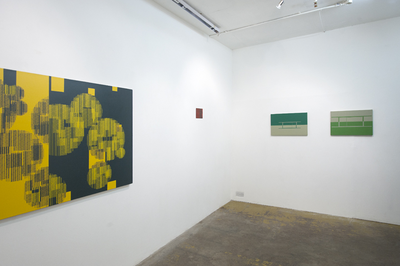
![[thumbnail of House in the Shape of a Stretcher, instalation shot]](https://reading-clone.eprints-hosting.org/26419/2/DSC_3965.jpg "House in the Shape of a Stretcher, instalation shot")
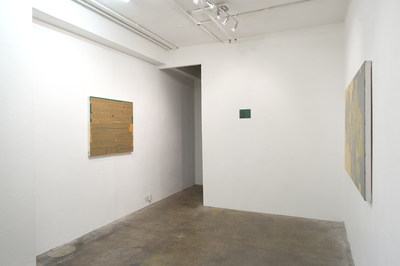
![[thumbnail of House in the Shape of a Stretcher, installation shot]](https://reading-clone.eprints-hosting.org/26419/3/DSC_3964.jpg "House in the Shape of a Stretcher, installation shot")
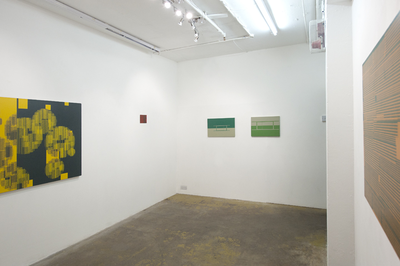
![[thumbnail of House in the Shape of a Stretcher]](https://reading-clone.eprints-hosting.org/26419/4/DSC_3963.jpg "House in the Shape of a Stretcher")
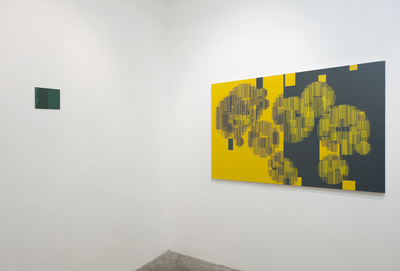


Renshaw, T.  ORCID: https://orcid.org/0009-0005-0871-2533
(2011)
House in the Shape of a Stretcher.
[Show/Exhibition]
ORCID: https://orcid.org/0009-0005-0871-2533
(2011)
House in the Shape of a Stretcher.
[Show/Exhibition]
Abstract/Summary
In an essay from 1910 the architect and critic Adolf Loos distinguishes between buildings that are for everyday practical use and buildings made for contemplation. The latter type he asserts may be considered as both architecture and works of art. He refers to only two types of contemplative architecture namely the tomb and the monument. There are certain paintings made in the early part of the twentieth century that do not observe this separation such as certain works by Hopper and de Chirico. Here the commonplace is simultaneously experienced in the way a tomb might be. This mortifying gaze condemns building by inducing a sense that space has become inhospitable and alienating. It could be argued that these and other paintings made around this time such as Carlo Carra The Abandoned House 1916 are like premonitions of what will occur when building observes the prescription laid down by Loos and omit an aesthetic dimension. However it might also suggest that buildings need their tombs or at least some space that is not completely assimilable by the daily, practical and functional needs of an inhabitant.
| Item Type | Show/Exhibition |
| URI | https://reading-clone.eprints-hosting.org/id/eprint/26419 |
| Divisions | Arts, Humanities and Social Science > School of Arts and Communication Design > Art > Fine Art |
| Download/View statistics | View download statistics for this item |
Downloads
Downloads per month over past year
University Staff: Request a correction | Centaur Editors: Update this record
